Improving Precision and Accessibility
For people living with diabetes, preventing foot ulcers is critical to reducing the risk of serious complications, including lower limb amputations. To enhance the delivery of diabetic foot care, Sengkang General Hospital (SKH) has piloted an innovative approach to producing customised insoles through an in-house 3D printing workflow, developed in collaboration with Singapore General Hospital's (SGH) 3D Printing Centre (3DPC). The new approach shortens the time taken for patients to receive customised insoles from up to two months to about one week, enabling earlier intervention and care.
Traditionally, customised pressure-relieving insoles were produced overseas, with patients often waiting several weeks before receiving them. If further adjustments were needed, additional time was required as the insoles had to be returned for modification. By bringing production in-house, SKH is able to significantly reduce turnaround time while providing patients with more timely access to personalised care.
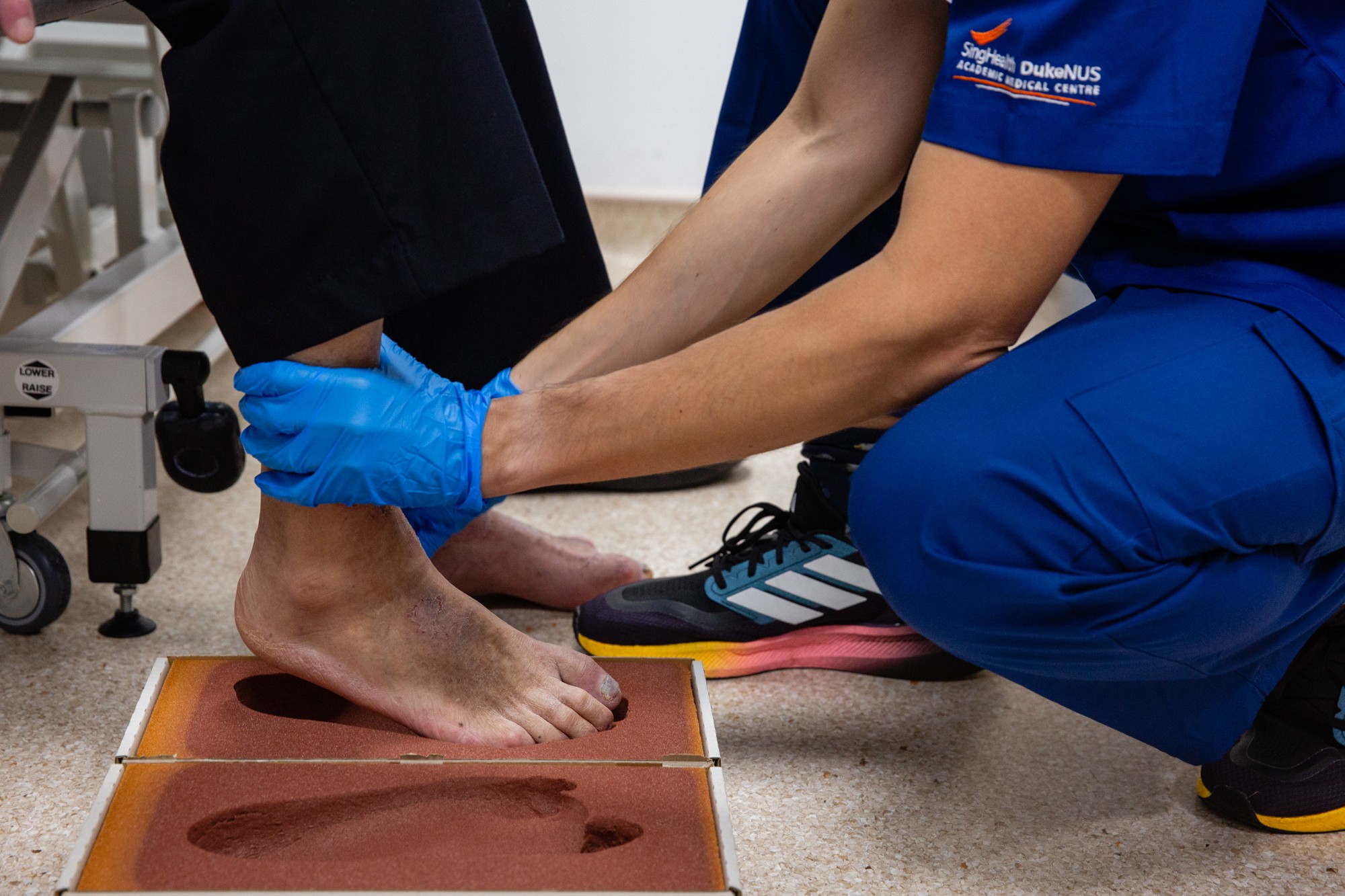
The new workflow begins with digital scanning of foam box impressions of each patient's feet. Using specialised software, podiatrists design insoles with varying densities and precise topographical adjustments tailored to different areas of the foot. The designs are then manufactured through in-house 3D printing, ensuring consistent quality and a more precise fit.
Collaboration Supporting Better Outcomes
The initiative was spearheaded by the SKH Podiatry team in collaboration with the Department of Orthopaedic Surgery and Plastic, Reconstructive & Aesthetic Surgery Services under the SKH Diabetic Limb Salvage service, together with SGH's 3D Printing Centre. The collaboration combines clinical expertise with advanced manufacturing capabilities to enhance diabetic foot care.
Initial results showed that the customised insoles reduced peak pressure by up to 28.5 per cent and improved pressure distribution by 52.7 per cent compared with traditional insoles. These improvements are important in supporting wound recovery and helping to prevent diabetic foot ulcers, which are a leading cause of lower limb amputations among people with diabetes.