"Phages are like little soldiers. When they find a bad bacterium, they infiltrate it and hijack the bacterial machinery."
Associate Professor Andrea KwaDeputy Director of Pharmacy (Research and Innovation)Singapore General Hospital
A Targeted Approach Against Resistant Bacteria
In 2024, Singapore General Hospital (SGH) became the first hospital in Southeast Asia to use phage therapy clinically to treat a patient who had exhausted available treatment options for a serious antibiotic-resistant infection.
Phage therapy uses bacteriophages, or phages, which are viruses that selectively target and kill specific bacteria while leaving other bacteria unaffected. Although the approach was widely used in the early 20th century before antibiotics became the mainstay of treatment, growing concerns over antimicrobial resistance have renewed interest in its potential.
The SGH patient, Ms A, had developed a difficult-to-treat infection caused by Pseudomonas aeruginosa following complex heart surgery involving a vascular and heart valve implant. As repeated infections continued despite prolonged antibiotic treatment, the SGH team used phage therapy together with antibiotics to treat the infection.
The treatment involved developing a customised cocktail of three phages that could work alongside antibiotics to target the bacteria. After receiving the two-week intravenous treatment in September 2024, Ms A was able to move from intravenous to oral antibiotics and avoided a high-risk surgery to remove the infected implant.
Building Capabilities for Future Infectious Disease Challenges
The successful treatment was made possible through years of preparation by the SGH team, which began building its phage library and developing production processes in 2021. The team now has more than 100 catalogued phage samples and continues to expand its capabilities to support patients with complex infections.
Unlike antibiotics, which can affect a broader range of bacteria, phages are highly specific and need to be matched to the bacterial strain causing the infection. This requires careful screening, testing and production to ensure the appropriate phage formulation is developed for each patient.
As antimicrobial resistance continues to pose a global healthcare challenge, SGH's work in phage therapy represents an important step towards developing new approaches for patients with infections that are difficult to treat with existing therapies.
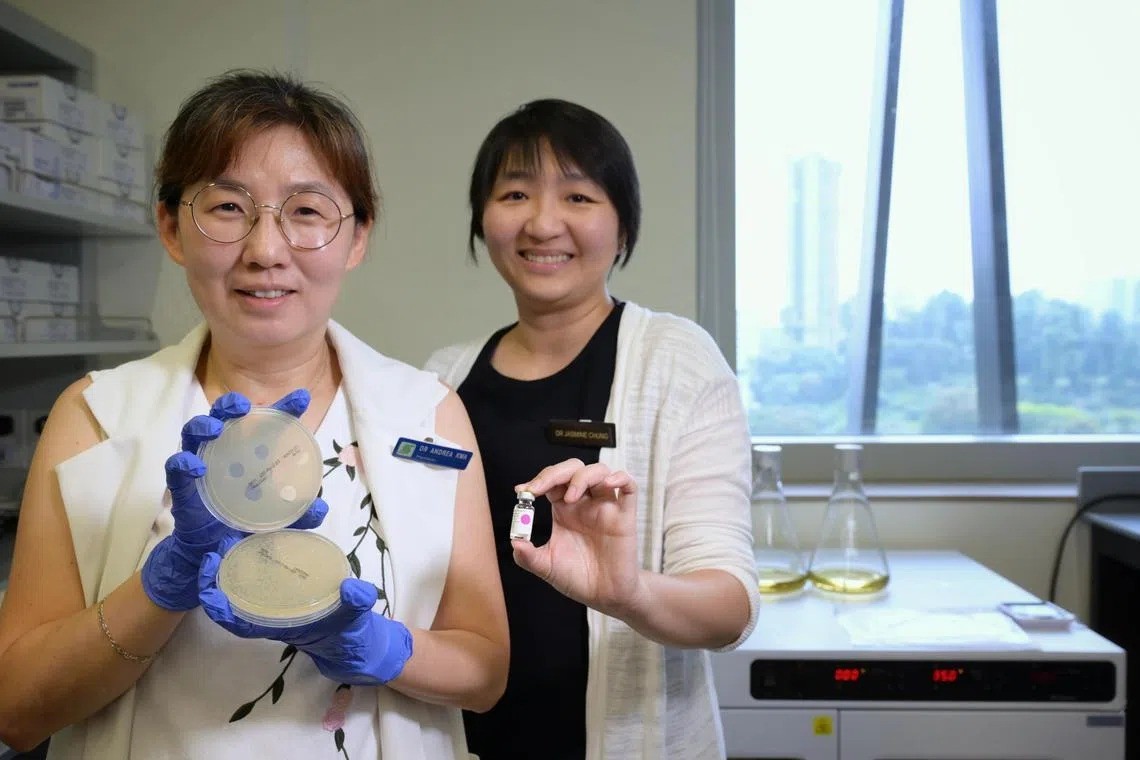
Photo credit: The Straits Times